


Neurosciences Intensive Care Unit
Specialized Critical Care for Complex Neurological Conditions
At UI Health, the Neurosciences Intensive Care Unit (Neuro ICU) provides highly specialized, accessible care for patients facing life-threatening neurological and neurosurgical conditions. Our multidisciplinary team combines advanced critical care expertise with leading-edge neurological and neurosurgical care to treat some of the most complex conditions affecting the brain, spine, and nervous system.
UI Health’s Neuro ICU is designed to care for patients who require intensive monitoring, rapid intervention, and coordinated specialty care following neurological injury, illness, surgery, or trauma. Our goal is to not only stabilize patients during critical moments but also to support recovery, improve outcomes, and guide families through every stage of care.
Whether a patient arrives through the Emergency Department, requires post-surgical monitoring, or is transferred from another hospital for advanced care, our Neuro ICU team is prepared to deliver compassionate, evidence-based care tailored to each patient’s unique needs to achieve the best outcomes possible.
Our Experts
-
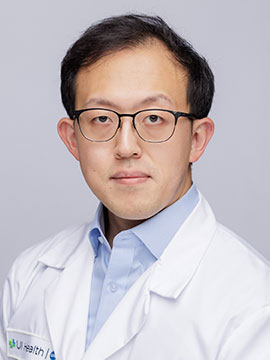
Jared Davis, MD
Neurology and Neurosurgery -
Ciro Ramos Estebanez, MD, PhD, MBA
Neurology and Neurosurgery



Specialized Neurocritical Care Expertise
Patients in the Neuro ICU are cared for by a dedicated team of neurointensivists, neurologists, neurosurgeons, advanced practice providers, critical care nurses, rehabilitation specialists, pharmacists, respiratory therapists, nutritionists, social workers, and case managers who specialize in neurological critical care.
Advanced Monitoring & Technology
The Neuro ICU uses advanced monitoring tools to closely track brain function, neurological status, breathing, circulation, and other critical systems in real time. This allows our team to identify changes and respond with timely interventions quickly.
Collaborative, Multidisciplinary Care
Neurological emergencies often require highly coordinated care across multiple specialties. The Neuro ICU team works closely with:
- Stroke specialists
- Neurosurgery
- Epilepsy specialists
- Neurovascular experts
- Trauma teams
- Rehabilitation services
- Palliative care
- Social work and care coordination
This collaborative approach ensures patients receive comprehensive care throughout hospitalization and recovery.
Comprehensive Continuum of Care
Recovery from neurological illness or injury often continues beyond the ICU. UI Health helps coordinate ongoing care, rehabilitation services, outpatient follow-up, and support resources to help patients and families navigate the next steps of recovery.
The Neuro ICU at UI Health is supported by multidisciplinary leadership across neurocritical care, neurosurgery, neurology, and stroke care, including:
- Dr. Ali Alaraj — Medical Director, Neuro Intensive Care Unit; Co-Director, Comprehensive Stroke Program
- Dr. Ciro Ramos-Estebanez — Chief, Division of Neurocritical Care
- Dr. Fernando Testai — Interim Head, Department of Neurology & Rehabilitation; Medical Director, Clinical Operations

Meet the Division Chief
Ciro Ramos-Estebanez, MD, PhD, MBA, practices in the Department of Neurology at UI Health. Dr. Ramos‑Estebanez provides comprehensive neurocritical care with a commitment to underserved populations. His clinical expertise includes intracerebral hemorrhage, severe ischemic stroke, status epilepticus, malignant cerebral edema, prognostication after cardiac arrest, and brain death determination.
As Chief of UI Health’s Neurocritical Care Division, Dr. Ramos‑Estebanez has helped establish a state‑of‑the‑art, 24‑bed Neurocritical Care Unit, an Intermediate Care Unit, and an Outpatient Neurocritical Care Clinic program.

Meet the Medical Director, Neuro Intensive Care Unit
Ali Alaraj, MD, is fellowship-trained in both cerebrovascular and endovascular neurosurgery. His clinical practice focuses on treating patients with all types of ischemic and hemorrhagic stroke, including subarachnoid hemorrhage, intracranial bleeding, and acute stroke. His medical expertise includes neurocritical care and treating patients with acute stroke, intracranial bleeding, brain aneurysms, arteriovenous malformations, complex dural arteriovenous fistulas, carotid-cavernous fistulas, carotid artery stenosis/occlusion, and intracranial-vessel stenosis/occlusion. He has more than 200 published peer-reviewed articles and textbook chapters and serves on the editorial board for many neurosurgery journals, including Neurosurgery, Interventional Neuroradiology, and Neurological Research. His research interests include outcomes of management of brain aneurysms and arteriovenous malformations; quantitative cerebral flow measures; computational quantification of intracranial flows; and virtual reality simulation in neurosurgical training.